

Every year, commercial fires threaten lives, property, and business continuity. Modern fire suppression systems play a critical role in stopping fires before they spread, protecting both people and assets from devastating loss.
Unlike fire sprinklers, which rely on water to control flames, suppression systems use specialized agents designed for specific hazards, from sensitive electronics to grease-laden commercial kitchens.
For over three decades, A Total Solution’s NICET-certified technicians have provided businesses with robust fire protection services, including expertly designed, installed, and maintained fire suppression systems that meet the latest safety codes and manufacturer standards.
In this blog, we explain what fire suppression systems are, how they work, where they’re used, and what makes clean agent, special hazard, and kitchen hood
suppression systems essential for commercial safety and compliance.
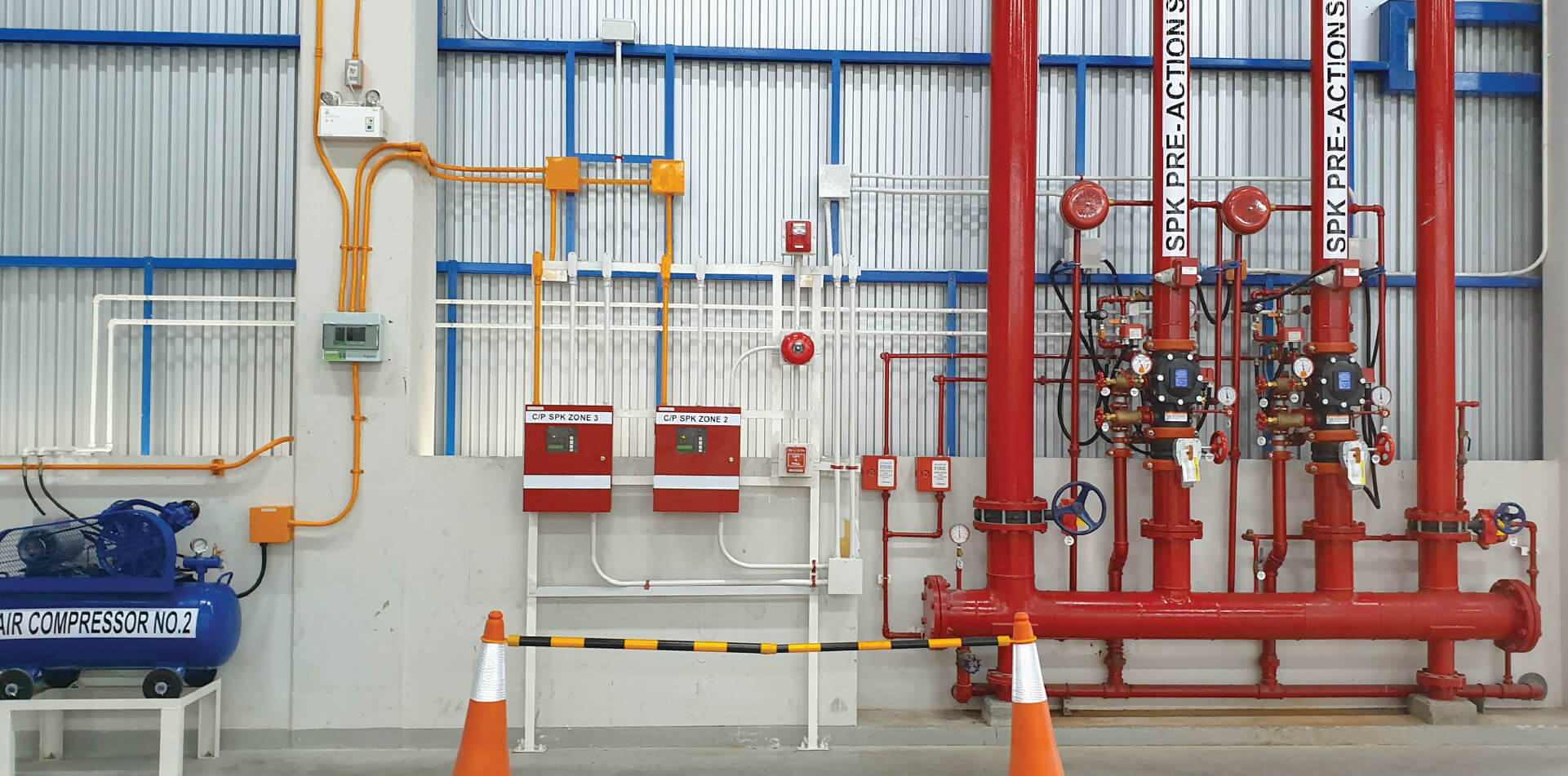
A fire suppression system is designed to detect and extinguish a fire automatically—often before flames are visible. Using advanced sensors and control panels, these systems identify smoke, heat, or flame signatures and release an extinguishing agent directly to the source.
While water-based sprinklers remain essential for general building protection, fire suppression systems provide a faster, more targeted response where water could damage property or equipment.
They’re especially valuable for data centers, healthcare facilities, manufacturing plants, commercial kitchens, and other commercial buildings where downtime or contamination can be costly.
Clean agent fire suppression systems use non-conductive, residue-free gases to extinguish fires without harming sensitive materials or electronics.
Common agents include FM-200, Novec 1230, and inert gas blends. These systems work by lowering oxygen levels or absorbing heat energy so combustion can’t continue, all while leaving no cleanup behind.
Clean agent systems are ideal for:
Each system must be carefully engineered to meet NFPA 2001: Standard on Clean Agent Fire Extinguishing Systems requirements. Proper design ensures the right concentration of gas, effective discharge time, and safe re-entry conditions after activation.
For facilities with multiple hazards—combining electronics, chemicals, or production lines—special hazard fire suppression systems integrate detection, control panels, and discharge networks tailored to each risk.
Few environments face greater fire risk than commercial kitchens. Grease, oil, and open flames create conditions where a fire can ignite in seconds. Kitchen hood fire suppression systems are designed to detect and extinguish these fires automatically—right where they start.
Mounted within the exhaust hood, these systems deploy wet chemical agents that quickly cool and smother flames while forming a soap-like barrier to prevent re-ignition. Once activated, the system also shuts down fuel and power sources to contain the hazard.
Restaurant and institutional kitchen systems are governed by NFPA 17A (wet chemical extinguishing systems) and NFPA 96 (ventilation control and fire protection of commercial cooking operations).
Regular inspection, recharge, and documentation are required to comply with insurance, fire code, and health-department regulations.
Whether it’s a single café or a large commercial kitchen, keeping a kitchen hood suppression system properly maintained ensures safety for staff and customers while upholding regulatory compliance.
A properly designed fire suppression system only performs as well as its maintenance program. Over time, changes in occupancy, renovations, or environmental conditions can affect how effectively a system responds during an emergency.
Scheduled inspection and testing help verify that pressure levels, detection circuits, release mechanisms, and agent concentrations remain within safe operating ranges.
Regular inspection helps:
With decades of experience across healthcare, education, government, and manufacturing, ATS offers full-service expertise from design and installation to testing, inspection, and 24/7 emergency response.
Choosing ATS means choosing:
When it comes to protecting lives and property, there’s no substitute for experience. From clean agent to kitchen hood fire suppression systems, ATS delivers the reliability, compliance, and rapid response your business deserves.
Contact A Total Solution today to schedule an inspection or consultation for your commercial fire suppression systems in Tampa Bay.

Fire pumps are the driving force behind many commercial fire protection systems, ensuring[…]
When you walk through a healthcare facility — whether it’s a hospice, an[…]
In healthcare, every second — and every dollar — matters. Facilities like hospices,[…]