
How Restaurant Fire Suppression Systems Work (and Why Every Commercial Kitchen Needs One)

Alicia Shepard
21 Oct 2026


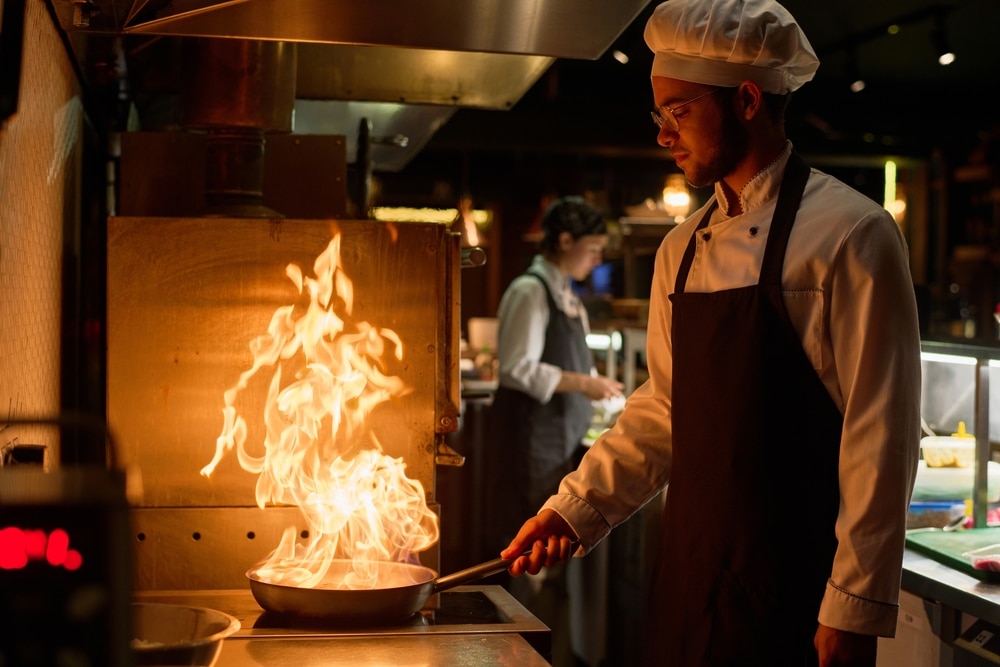
Cooking is the leading cause of nonresidential building fires in the United States, accounting for roughly 30% of all fires in commercial buildings, according to the U.S. Fire Administration. In a commercial kitchen, that risk is concentrated in exactly the equipment your staff uses every shift: fryers, grills, and ranges running at high heat, surrounded by grease and cooking oil.
Water doesn’t put out a grease fire; it can spread burning oil and make things worse. That’s why commercial kitchens rely on a dedicated restaurant fire suppression system rather than sprinklers alone.
Whether you’re specifying a system for a new kitchen or trying to understand what your current provider should be doing, here’s how these systems work, the codes that govern them, and what to look for in the company that installs and maintains yours.
What Is a Restaurant Fire Suppression System?
A restaurant fire suppression system, often called a kitchen hood suppression system, is mounted inside and above your exhaust hood, directly over the cooking equipment it protects. It’s designed to detect a fire at its source and discharge a wet chemical extinguishing agent onto the affected appliance automatically, without anyone needing to trigger it manually (though a manual pull station is also required as a backup).
How the System Works, Step by Step
From the moment a flare-up starts to the moment it’s out, the system moves through five stages in seconds:
- Detection. Fusible links or heat detectors positioned above each piece of protected equipment respond to abnormal heat.
- Activation. Once triggered, the system releases a wet chemical agent through nozzles aimed at each hazard area: fryers, griddles, ranges, and the hood and duct above them.
- Suppression. The agent cools the surface, smothers the flame, and reacts with residual grease to form a soap-like barrier that helps prevent re-ignition, a process called saponification.
- Fuel and power shutoff. The system automatically cuts gas or electric power to the protected appliances so the fire can’t reignite once the agent is discharged.
- Notification. Activation typically ties into the building’s fire alarm system, sounding an alarm and, where connected, notifying the fire department.
None of that happens by accident. Every part of that sequence, from detector placement to agent type, is dictated by code.
The Codes That Govern These Systems
Two NFPA standards apply directly to restaurant fire suppression systems:
- NFPA 17A governs the design, installation, and maintenance of wet chemical fire-extinguishing systems, the type used in essentially all modern commercial kitchens.
- NFPA 96 governs ventilation control and fire protection for the entire commercial cooking operation, including the hood, ductwork, and exhaust fan the suppression system ties into.
Together, those two standards cover both the system itself and the ventilation it’s tied into. Modern systems are also built and tested to the UL 300 standard, introduced in 1994 to address the higher heat and larger volumes of vegetable oil used in modern fryers and cooking equipment. A kitchen with a suppression system installed before 1994 likely predates UL 300 and should be evaluated for an upgrade.
| Older Dry Chemical Systems (pre-UL 300) | Modern Wet Chemical Systems (UL 300) | |
|---|---|---|
| Agent type | Dry chemical powder | Liquid wet chemical |
| Grease fire re-ignition risk | Higher | Lower (forms a barrier via saponification) |
| Suited to modern high-efficiency fryers | Not adequately tested for it | Yes |
| Code standard | Predates UL 300 (1994) | Meets current UL 300 |
What to Look for When Hiring a Kitchen Fire Suppression Company
A few things separate a reliable provider from one that will leave you exposed at your next fire marshal visit:
- Florida fire protection contractor license. Only contractors licensed by Florida’s Division of State Fire Marshal are authorized to inspect, service, and tag kitchen suppression systems. Ask for the license number and confirm it’s active.
- Manufacturer training on your specific system. Ansul, Amerex, Buckeye, and other brands each have their own components and service quirks. Confirm the technician is factory-trained on your brand, not just “suppression systems” in general.
- A real semiannual reminder system. NFPA 96 requires inspection every six months without exception. A company that tracks your due date and reaches out before it’s due saves you from finding out at the worst possible time.
- Documentation you can hand a fire marshal or insurer on the spot. Every inspection should produce a dated, signed report and a current tag on the system, not just a verbal “you’re good.”
- Kitchen fire experience specifically, not general fire sprinkler or alarm work with suppression added on as a side service. NFPA 96 compliance has its own requirements, and a technician who mainly works on other systems may not catch them.
None of this is unusual to ask for. A provider with nothing to hide will have a clear, specific answer to every item on this list.
Inspection and Maintenance Requirements
NFPA 96 requires kitchen hood fire suppression systems to be inspected and serviced at least every six months by a qualified, factory-trained technician. A proper inspection covers:
- Nozzle condition and blockage
- Fusible link condition and replacement schedule
- Agent tank pressure and gas cartridge integrity
- Manual pull station function
- Fuel and power shutoff interlock testing
Some jurisdictions and insurers require more frequent service depending on cooking volume, so check with your local fire marshal or your insurance carrier if you’re unsure which schedule applies to your kitchen.
What Happens If the System Isn’t Maintained
A restaurant fire suppression system that hasn’t been serviced on schedule can fail exactly when it’s needed most, whether that means blocked nozzles that don’t discharge, an expired agent tank, or a fuel shutoff that doesn’t trigger. Beyond the immediate safety risk, a failed or overdue inspection can also mean a fire code violation, a denied insurance claim, or a forced shutdown until the system is brought back into compliance.
Frequently Asked Questions
How often does a restaurant fire suppression system need to be inspected?
At least every six months, per NFPA 96, performed by a qualified technician. Some high-volume kitchens or insurance policies may require more frequent service.
What type of fire suppression system do restaurants use?
Nearly all modern commercial kitchens use a wet chemical system built to the UL 300 standard and governed by NFPA 17A. Older dry chemical systems installed before 1994 don’t meet the current standard and typically need to be evaluated for an upgrade.
Can a restaurant fire suppression system extinguish a grease fire on its own?
Yes. The system is designed to detect and suppress a fire at the cooking surface automatically, without staff intervention, though a manual pull station is also required as a backup activation method.
Does my restaurant need a separate fire suppression system if we already have sprinklers?
Yes. Building sprinklers protect the general space, but water can spread a grease fire rather than extinguish it. A dedicated wet chemical kitchen suppression system is required specifically because standard sprinklers aren’t an appropriate response to a grease or oil fire.
Does Florida require a specific license to service kitchen fire suppression systems?
Yes. Only contractors licensed by Florida’s Division of State Fire Marshal are authorized to inspect, service, and tag these systems. Confirm your provider’s license is active before scheduling service.
For a broader look at how these systems fit alongside clean agent and special hazard suppression, see A Total Solution’s guide to fire suppression systems for commercial buildings.
A Total Solution has provided kitchen hood fire suppression inspections, servicing, and repairs to Tampa Bay restaurants and commercial kitchens since 1988. If your system is due for its semiannual inspection, schedule a free consultation or call (727) 942-1993.


Related Blogs

How to Choose a Fire Alarm Company for Your Business
Hiring a fire alarm company is a decision you’ll live with for years.[…]

Charlie Ragghianti
7 Oct 2026
Back-to-School Fire Protection: Treating August as a Life Safety Checkpoint
Every August, school buildings go from near-empty to full occupancy in a matter[…]
Alicia Shepard
12 Aug 2026

What Is Central Station Monitoring — And Is Your Building Actually Getting It?
When your fire alarm goes off at 2 a.m. on a Sunday, one[…]