
What Is Central Station Monitoring — And Is Your Building Actually Getting It?

Charlie Ragghianti
1 Jul 2026


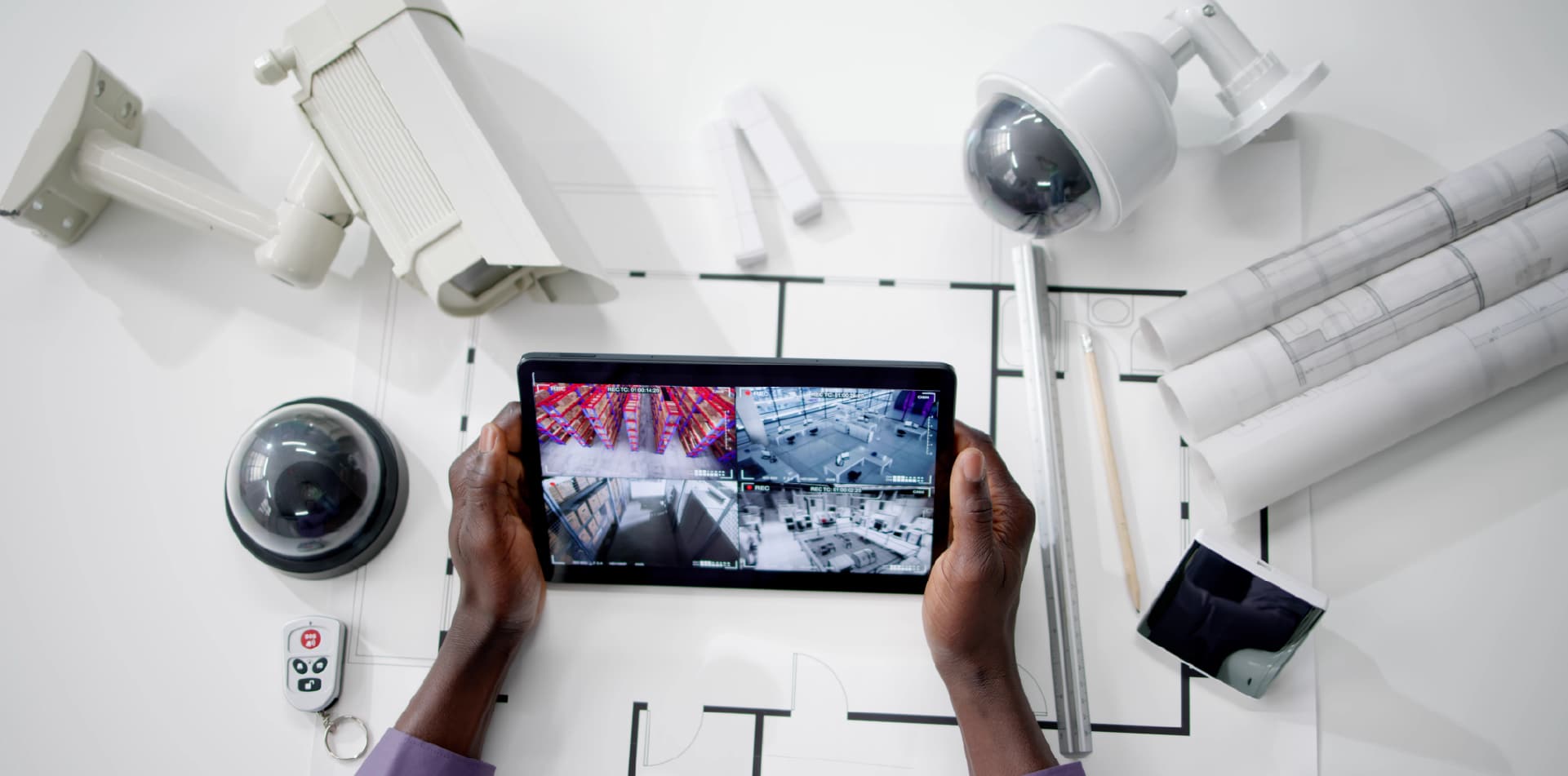
When your fire alarm goes off at 2 a.m. on a Sunday, one question determines what happens next — and it’s the question that central station monitoring exists to answer: is anyone listening?
For most commercial buildings, the answer is supposed to be yes. Your alarm system is connected to a monitoring center. Operators receive the signal, verify the situation, and dispatch fire rescue or law enforcement within seconds. That’s the promise of central station monitoring and when it works as designed, it’s one of the most effective life safety tools available to a facility manager.
But here’s what most guides on this topic don’t tell you: not every building that’s described as “monitored” is actually receiving true central station service. There’s a meaningful difference between central station monitoring and the lower-tier remote station monitoring that many facilities unknowingly have and that difference has real consequences for response times, compliance, and liability.
In this guide we explain exactly what central station monitoring is, what the governing standards require, how to tell if your current provider meets those standards, and what Tampa Bay facility managers should know about their specific obligations under Florida law.
What Central Station Monitoring Actually Is
A central station is a secure, permanently staffed facility that receives alarm signals from connected fire alarm systems, security systems, video surveillance systems, and environmental monitors at commercial properties. When a signal is triggered at your building, it travels through a supervised communication path to the central station within seconds.
From there, a trained operator does three things:
- Verifies the signal — distinguishing between a genuine emergency and a likely false alarm before dispatching responders
- Contacts the appropriate parties — the property owner, designated contacts, fire rescue, or law enforcement depending on the signal type and pre-established response protocols
- Documents everything — logging the signal, the time received, actions taken, and outcome for compliance and audit purposes
NFPA 72 — the National Fire Alarm and Signaling Code — establishes the requirements that govern how central station monitoring must operate, including signal transmission times, operator response protocols, documentation standards, and runner service obligations. In Florida, those requirements carry the force of law. A monitoring provider that cannot demonstrate compliance with NFPA 72 Chapter 26 is not providing true central station service — regardless of what they call themselves.
That distinction is what separates a credible monitoring provider from one that simply calls itself a central station.
The Distinction Most Facility Managers Don’t Know About Central Station Monitoring
NFPA 72, the National Fire Alarm and Signaling Code, defines three types of supervising station service for commercial fire alarm systems:
| Type | What It Means | Who Operates It |
|---|---|---|
| Central Station Service | Full-service monitoring under NFPA 72 Chapter 26 — includes runner service, service contracts, and compliance documentation | Third-party professionally staffed monitoring company |
| Remote Supervising Station | Signals received at a remote location approved by the local authority — lower requirements than central station | Typically cities, counties, or non-UL providers |
| Proprietary Supervising Station | Monitoring performed at a location owned and operated by the property owner | Large organizations like retail chains monitoring their own facilities |
As the National Fire Sprinkler Association explains, central station service is a comprehensive service that includes alarm system installation, monitoring, retransmission of alarms, record-keeping, testing, and maintenance — all under a formal contract with the subscriber.
The critical point: not all fire alarm systems monitored at a listed facility are receiving true central station service. Many are receiving remote station service, which has significantly lower requirements. If your contractor or building manager describes your system as “monitored” without specifying which type, it’s worth clarifying exactly what you have.
What NFPA 72 Requires of a Central Station
NFPA 72 Chapter 26 governs supervising station alarm systems and establishes the requirements a central station must meet. Those requirements cover six core areas:
- Physical facility standards — The monitoring center must have redundant power supplies, backup generators, secure communications infrastructure, and proper environmental controls to maintain operations under any conditions.
- Staffing requirements — Operators must meet minimum training and competency standards. Staffing levels must be adequate to handle signal volume at all hours, not just during business hours.
- Signal processing — Systems must receive, record, and process signals within specified timeframes. Every action taken must be documented with timestamps.
- Communication redundancy — Multiple communication paths must be in place to ensure signals reach the monitoring center even if primary channels — phone lines, internet, or cellular — fail.
- Record keeping — Detailed logs of all signals, operator actions, and response times must be maintained and made available for compliance review and fire marshal inspection.
- Runner service — Under NFPA 72, central station service requires that if an alarm or supervisory signal doesn’t restore automatically, a qualified technician must be dispatched and arrive within two hours. For trouble signals that aren’t restored, response is required within four hours. This runner service obligation is one of the clearest distinctions between true central station service and lower-tier monitoring.
Central Station Monitoring & What Florida Law Requires
In Florida, fire alarm monitoring requirements flow directly from NFPA 72, which the state has adopted as law under Florida Statute 633.348. This means the monitoring, signal transmission, and documentation requirements in NFPA 72 Chapter 26 are not optional for Florida commercial buildings — they are state-mandated.
Additionally, anyone performing fire alarm monitoring work in Florida must hold the appropriate license under Florida Statute 633.336. Working with an unlicensed monitoring provider doesn’t just create a compliance risk — it can invalidate your monitoring records and create insurance and liability exposure.
For healthcare facilities in particular (hospitals, assisted living communities, and clinics regulated by the Agency for Health Care Administration (AHCA)) monitoring compliance is a survey item. A facility without properly documented central station monitoring service, or one whose monitoring provider cannot demonstrate UL listing, is a facility with a compliance problem that will surface during a survey.
Self-Monitoring vs. Central Station Monitoring
Some commercial systems offer self-monitoring, which are alerts sent directly to a building owner’s phone or email. It sounds convenient, and for very low-risk applications it can be appropriate. For most commercial buildings, and virtually all buildings with fire alarm systems, it falls well short of what’s required and what’s effective.
| Factor | Self-Monitoring | Central Station Monitoring |
|---|---|---|
| Who receives the alarm | Building owner or designated contact | Trained operator, 24/7/365 |
| Response if you’re unavailable | Alarm goes unaddressed | Operator follows pre-established protocol regardless |
| Emergency dispatch | Owner must contact authorities | Direct communication with fire rescue or law enforcement |
| False alarm filtering | Owner decides | Operators trained to verify before dispatching |
| NFPA 72 / Florida compliance | Does not satisfy requirements | Satisfies requirements when properly documented |
| Insurance requirements | Often does not qualify | Most carriers require professionally monitored systems |
| Documentation | None or minimal | Detailed logs maintained for compliance and audits |
| Runner service | None | Required under central station service contract |
The fundamental gap is availability. Self-monitoring places the full burden of response on a person who may be asleep, traveling, in a meeting, or simply distracted. Central station monitoring removes that dependency entirely.
“The question I always ask facility managers is: what actually happens when your alarm goes off at 3 a.m. on a holiday weekend? If the honest answer is ‘I’m not sure,’ that’s the problem central station monitoring solves. Someone is always listening — and they know exactly what to do.”— Charles Ragghianti, President, A Total Solution, Inc. NICET III Certified | 33+ Years in Commercial Fire and Security Systems
What ATS Monitors — And Why It Matters to Have One Provider
Central station monitoring isn’t just for fire alarms. A properly integrated monitoring program covers every system that can generate a signal requiring a response. At A Total Solution, that includes:
- Fire alarm monitoring — Smoke detection, heat detection, manual pull stations, sprinkler flow, and suppression system signals monitored and dispatched in accordance with NFPA 72 Chapter 26 requirements.
- Security alarm monitoring — Intrusion detection, door and window contacts, motion sensors, and perimeter protection with verified response protocols.
- Video surveillance monitoring — Camera feeds and analytics integrated with alarm signals, giving operators real-time visual context when responding to events.
- Access control monitoring — Forced door alerts, failed access attempts, and after-hours access anomalies flagged for review and response.
- Healthcare system monitoring — Nurse call system alerts, wander management signals, and life safety system events for assisted living communities, hospitals, and clinics.
Having a single provider monitor all of these systems matters. When a door alarm triggers simultaneously with a camera alert, an operator with access to both signals can make a faster, better-informed decision than two separate monitoring centers responding independently to fragments of the same event.
Five Questions to Ask Your Current Monitoring Provider
If you’re unsure whether your current monitoring setup is truly compliant, these questions will tell you quickly:
- Does your monitoring center comply with NFPA 72 Chapter 26 central station service requirements? A legitimate provider will answer this clearly and be able to describe their runner service obligations, communication redundancy, and documentation protocols. Vague answers are a red flag.
- Does our service contract include runner service as required by NFPA 72? True central station service requires a technician dispatched within two hours for alarm or supervisory signals that don’t restore. If your contract doesn’t include this, you may have remote station service — not central station service.
- What communication redundancy does your monitoring center have? A properly configured central station has multiple communication paths — cellular, internet, and dedicated lines — so a single outage doesn’t break the connection between your building and the monitoring center.
- How is our monitoring documented, and will you provide records for a fire marshal inspection or insurance audit? Your monitoring provider should be able to produce signal logs, response time records, and documentation of operator actions on request.
- Is your monitoring center licensed to operate in Florida? Given Florida’s specific licensing requirements under Chapter 633, verify that your provider is authorized to perform monitoring work in the state.
Frequently Asked Questions About Central Station Monitoring
Q: Is central station monitoring required for commercial buildings in Florida?
For most commercial buildings with fire alarm systems, yes. NFPA 72 — adopted into Florida law under Florida Statute 633.348 — requires that fire alarm systems be monitored by an approved supervising station. The specific type of monitoring required depends on the occupancy classification and local authority having jurisdiction, but central station service is the standard for most commercial and healthcare facilities.
Q: What is the difference between professionally monitored and self-monitored systems?
A professionally monitored central station has trained operators on duty 24/7 who receive signals, verify events, and dispatch emergency responders directly. Self-monitoring sends alerts to a building owner’s phone — placing the full burden of response on a person who may be unavailable. For most commercial buildings in Florida, professional central station monitoring is required under NFPA 72.
Q: How quickly does a central station respond to an alarm signal?
Under NFPA 72 requirements, monitoring centers must receive and begin processing signals within specified timeframes. For fire alarms specifically, NFPA 72 places the highest priority on rapid emergency dispatch. The specific response time from signal receipt to emergency services dispatch depends on the monitoring center’s protocols and the signal verification requirements in place.
Q: What happens if the communication path between my building and the monitoring center goes down?
A properly configured central station monitoring system supervises the communication path itself. Under NFPA 72, a single communication path must be supervised at intervals not exceeding 60 minutes. If the path goes down and is not restored, the monitoring center is required to notify the property owner and take appropriate action. Properly configured centers have redundant communication paths specifically to prevent this scenario.
Q: Can one central station monitor both my fire alarm and security systems?
Yes — and for most commercial facilities, integrated monitoring through a single provider is preferable. Integrated monitoring means operators have a complete picture of all active signals from a single interface, enabling faster and more informed response decisions. It also simplifies documentation, billing, and compliance management.
Central Station Monitoring in Tampa Bay — A Total Solution
A Total Solution has provided commercial fire alarm monitoring, security monitoring, and healthcare system monitoring across the Tampa Bay area since 1988. We are licensed through the Florida State Fire Marshal under Chapter 633 and work to NFPA 72 standards on every monitoring engagement.
Whether you’re evaluating your current monitoring provider, setting up monitoring for a new facility, or trying to confirm that your existing service meets Florida compliance requirements, our team can walk you through what your specific occupancy type requires and what a properly documented monitoring program looks like.
📞 Call us at (727) 942-1993 or schedule a consultation online.
Recent Posts

Related Blogs
Back-to-School Fire Protection: Treating August as a Life Safety Checkpoint
Every August, school buildings go from near-empty to full occupancy in a matter[…]

Alicia Shepard
12 Aug 2026
Annual Fire Alarm Inspections: What Every Healthcare Facility Must Know to Stay Compliant
In healthcare environments where vulnerable populations depend on staff for their safety, fire[…]
Charlie Ragghianti
3 Jun 2026
Fire Alarm Monitoring, Testing, and Inspection: What Florida Businesses Need to Know
Installing a commercial fire alarm system is the starting point, not the finish[…]