
Nurse Call Systems for Assisted Living and Healthcare Facilities: Why Response Time and Reliability Matter

Joe Velez
23 Aug 2026


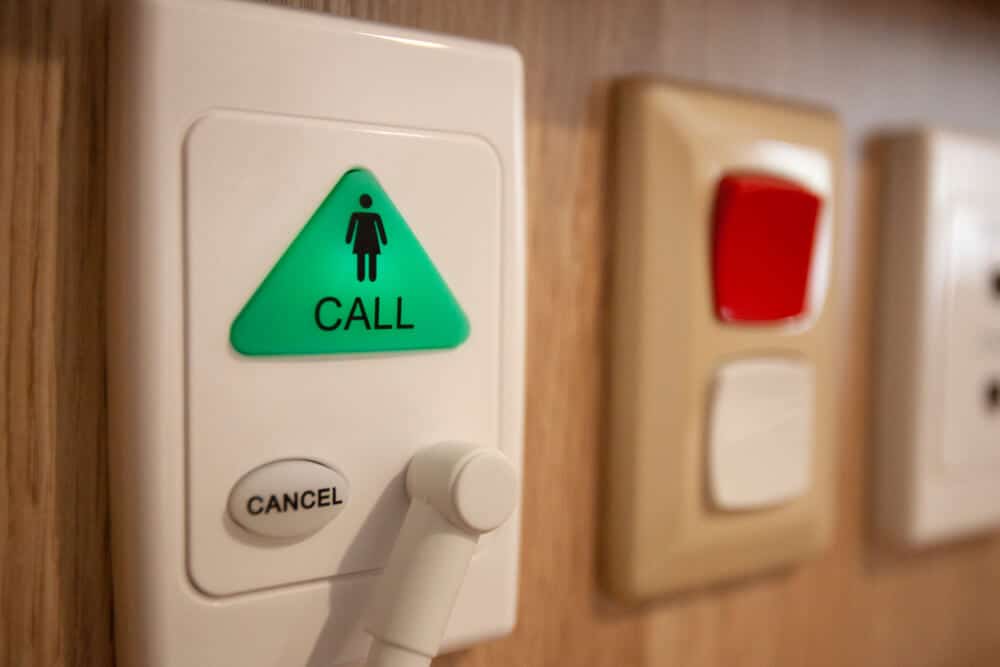
In an assisted living community or a healthcare facility, a nurse call system is not just another piece of equipment on the wall. It is the link between a resident who needs help and the staff responsible for getting to them. When someone falls in a bathroom, a patient becomes distressed after a procedure, or a resident cannot get out of bed safely, the speed and clarity of that link is what matters.
For assisted living facilities, skilled nursing and memory care communities, rehab centers, surgery centers, and clinics, that communication has to be fast, reliable, and simple for staff to manage. In this blog we explore what a nurse call system actually does, how to choose between wired and wireless, the warning signs that a system is past its useful life, and why installation and long-term service matter as much as the hardware itself.
A Total Solution installs and services TekTone nurse call systems for healthcare and senior living facilities, and treats them as part of a facility’s daily care and response process rather than a standalone device on the wall.
What a Nurse Call System Actually Does
At its simplest, a nurse call system turns a request for help into an alert that reaches the right person, in the right place, fast.
In basic form, it is a button, pull cord, pendant, or wall station that signals when help is needed. More capable systems add visual and audible alerts, staff notification, wireless devices, emergency call stations, resident check-in, door monitoring, and event reporting. You will hear these called call bell systems, call light systems, or resident call systems, but the job is the same: a dependable path between the person asking for help and the caregiver who answers. When a resident presses a pendant, staff need to know where the call came from and what kind of help it points to, and they need to know it in seconds.
A nurse call system is not really about technology. It is about making sure a resident, patient, or staff member can ask for help and know the right people will be alerted quickly. In assisted living and healthcare, reliability matters because people depend on that system every day. – Joe Velez, Director of Service, A Total Solution, Inc.
Why Nurse Call Is Essential in Assisted Living
Assisted living is built around independence with support close at hand, and the nurse call system is what keeps that support reachable.
Residents may not need hospital-level care, but many need help on short notice: getting out of bed, moving from a chair, recovering after a fall, or handling a sudden dizzy spell or medication side effect. Without a reliable way to call for help, a resident may try to move alone or wait too long to ask, and either choice raises the risk. Nurse call closes that gap.
It also supports staff, who cannot be everywhere at once. Instead of relying on rounds and hallway checks, caregivers get an alert tied to a specific room or area. Families notice too. When they tour a facility, one of the first things they want to understand is how their loved one can reach help, and a dependable system becomes part of why they trust the place.
Why It Matters in Commercial Healthcare
Nurse call is not only an assisted living tool. Surgery centers, rehab facilities, clinics, and skilled nursing environments rely on it just as much.
A patient in recovery needs to signal for help. A rehab patient needs a safe way to call for transfer assistance. Clinic staff need to summon help in a patient area without shouting down a hall. What these settings share is a need for a defined, repeatable response process, because staff turnover, shift changes, and expansion all create gaps when communication depends on informal habits. A nurse call system replaces those habits with one clear pathway.
Why A Total Solution Installs TekTone
The system a facility chooses should fit how it actually operates, which is why A Total Solution builds around TekTone.
TekTone is an established manufacturer of nurse call and healthcare communication systems, with product lines for hospitals, nursing homes, assisted living, and memory care. For a facility, the appeal is practical: reliability, room to scale, and serviceability in a working care environment. The Tek-CARE platform can be configured with visual and audible alerts, resident and staff stations, master stations, corridor lights, and call prioritization. Its wireless options suit senior living and campus settings where residents move around, using portable pendants and transmitters that can include emergency switches, check-in switches, and door or motion monitoring. Event reporting rounds it out, giving administrators a record of activity to support staffing, training, and maintenance decisions.
Wired vs. Wireless: Which Fits Your Facility
One of the first questions leaders ask is whether they need a wired or wireless system. The honest answer is that it depends on the building.
A hardwired system fits new construction, major renovations, hospitals, and larger facilities that want permanent infrastructure and long-term stability, where the design supports cabling. A wireless system fits assisted living, occupied buildings, retrofits, and any facility that needs flexibility, since it reduces installation disruption and adapts more easily as resident needs change. The right call depends on facility type, building layout, construction status, resident population, staff workflow, budget, and expansion plans. It should never be made from a brochure. It should be designed around the building.
Nurse Call and Fall Risk
Falls are the single biggest safety concern in senior care, and nurse call is one of the tools that helps residents get help sooner.
About one in four adults 65 and older falls each year, and falls are the leading cause of injury-related death in that age group, according to the CDC. No system prevents every fall, but nurse call helps a resident request help before a risky move or right after an incident, and that speed changes outcomes. A pendant or pull cord gives an unsteady resident a way to ask for help instead of chancing it alone. A bathroom station covers one of the highest-risk spots in the building. A common-area station helps residents who are away from their rooms. For caregivers, the alert means learning about a problem now rather than at the next scheduled round.
Nurse Call and Memory Care
Memory care adds a layer, because residents may wander or become disoriented and enter unsafe areas.
Nurse call and wander management are different systems, but they belong in the same resident-safety conversation. A memory care setting may combine call stations in rooms, bathrooms, and common areas with door monitoring, motion detection, or resident-worn devices, scaled to the care model and risk level. TekTone’s line spans nurse call, wireless nurse call, and wander management, which lets a facility build a broader safety strategy without stitching together unrelated products. The aim is to protect residents while keeping the environment from feeling institutional.
Signs Your Nurse Call System Is Past Its Prime
Plenty of facilities run a nurse call system long after it should have been replaced. It still beeps and lights up, so it feels fine, but that is not the same as working well.
Watch for frequent service calls, parts that are getting hard to source, inconsistent alerts, weak coverage in common areas, no reporting capability, and repairs that never quite solve the problem. Any one of these creates strain: staff invent workarounds, maintenance burns time troubleshooting, and residents lose confidence when a call device is unreliable. At some point, repair stops being the smart play, and a professional evaluation can tell you whether to repair, upgrade, expand, or replace.
Installation and Service Are Half the System
Even the best hardware underperforms if it is designed or installed poorly, and it degrades without service.
Installation determines call station placement, device coverage, wireless performance, alert routing, and how easy the system is to service later. In an occupied facility that cannot pause operations, the work has to be planned to protect residents and staff while it happens, which takes an installer who understands both the technology and the environment.
Service keeps it honest after that. Buttons wear out, pull cords get damaged, wireless devices need battery maintenance, and building changes create new coverage needs. Preventive testing catches these before a resident is left waiting, and documentation gives leadership a record of what was done and what is next. A Total Solution provides nurse call installation, inspection, repair, and service, with technicians trained on both wired and wireless TekTone systems.
What to Ask Before Choosing a System
A few practical questions move the conversation from “what should we buy” to “what will actually support our facility.”
Start with the building: how many rooms, bathrooms, and common areas need coverage, and do residents need pendants or mobile call options? Then the approach: wired, wireless, or hybrid, and do you need reporting software or mobile alerts for staff? Then the future: are renovations or expansion planned, is the current system hard to repair or short on parts, and can whatever you choose grow with you? Finally, the partner: who installs it, who services it, and how fast can they respond when something breaks?
Why Work With A Total Solution for TekTone Nurse Call Systems
A Total Solution is a Veteran-Owned fire protection and security company that has served healthcare and senior living facilities across Tampa Bay since 1988, and a TekTone representative and installer. What sets the team apart is a healthcare focus: technicians who understand care environments, the regulations that govern them, and what is at stake when a resident presses a call button. The relationship is built for the long term, not a drop-and-go install. To talk through your facility, reach out to A Total Solution.
Service Areas
A Total Solution services TekTone nurse call systems for healthcare and assisted living facilities across Tampa Bay and Central Florida, including Tampa, Clearwater, St. Petersburg, Largo, Palm Harbor, Oldsmar, Wesley Chapel, Brandon, Lakeland, and the surrounding Pinellas, Hillsborough, and Pasco County communities. For multi-location operators, A Total Solution can also evaluate consistency across sites, from system performance to replacement planning and documentation.
The Bottom Line
A nurse call system is only worth anything if it works the moment someone needs it. It should be reliable, clear, serviceable, and built around how your facility actually runs. If yours is outdated, hard to service, or short on coverage, now is the time to review it. Schedule a nurse call evaluation with A Total Solution to look at your current system, find the gaps, and settle on the right solution.


Related Blogs

Wander Management and Elopement Prevention in Assisted Living: A Florida Facility Guide
For assisted living and memory care communities in Florida, wander management and elopement[…]

Charlie Ragghianti
16 Sep 2026
Where Security Cameras Belong — and Don’t — in Healthcare Facilities
Security cameras are standard in most commercial buildings. In healthcare facilities, they’re just[…]
Charlie Ragghianti
15 Jul 2026
The Future of Nurse Call Systems: How Modern Technology Strengthens Safety and Care
Nurse call systems have evolved from basic signaling tools into sophisticated, intelligent platforms[…]