
The Basics of a Well-Designed Fire Alarm System

Malia Powers
25 Nov 2015


A well-designed fire alarm system is the first means of alerting your residential or commercial building’s occupants of a fire. The most effective fire alarm systems are comprised of many different components, including:
- Fire Alarm Panel – The fire alarm panel is the brain of the whole fire alarm system, as it monitors inputs and the system’s integrity, controls outputs, and relays information across every connected device. It is important to make sure that your fire alarm panel meets all the needs of your system and may connect to all necessary devices.
- Primary and Secondary Power Supplies – Typically controlled by the power company, the primary power supply is usually a non-switched 120 or 240-volt AC source. Most commercial applications use dedicated branch circuits that supply power solely to the fire alarm system. The secondary power supply usually consists of lead-acid storage batteries, generators, and/or other emergency power sources. This backup power supply ensures that your fire alarm will keep working even if there is a power outage affecting your building.
- Initiating Devices – Initiating devices act as inputs for the fire alarm panel and may be activated manually or automatically. Manual initiating devices include “Break Glass” stations, pull stations, and buttons; these devices are typically located near exits and are easily identified and operated. Automatically initiating devices respond when physical changes that are associated with fire are detected in the atmosphere, including, smoke, heat, flames, carbon monoxide, and other combustion products. More recent innovations in initiating devices actually analyze the visible effects of fire and movement.
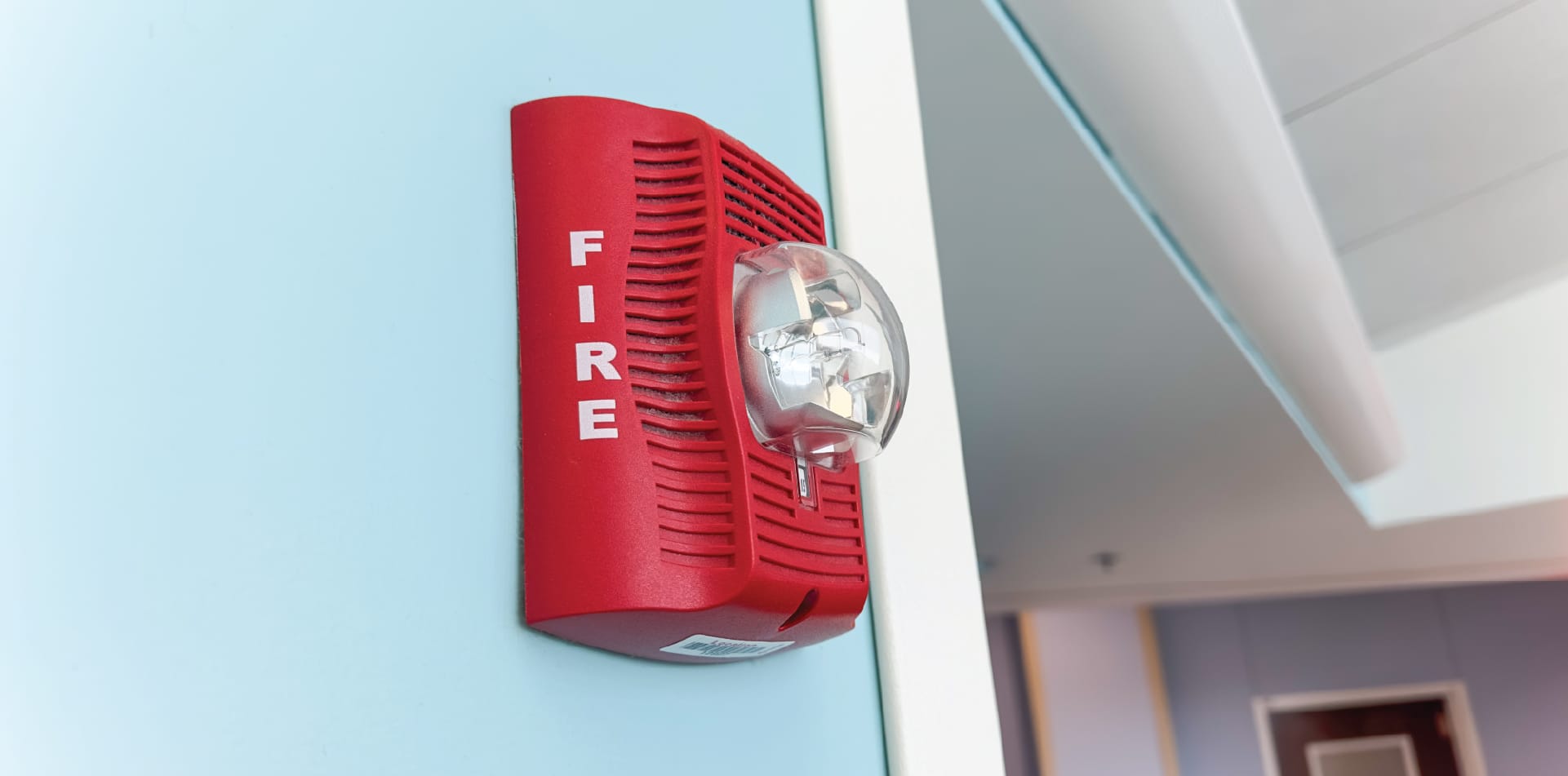
 Notifications Appliances – Notification appliance include audio devices, like speakers and bells, and visual alerts, such as flashing strobe lights. The purpose of these parts of a fire alarm system is to alert building occupants of an emergency to help facilitate a safe and quick exit. These notification methods are designed to be distinct and universally understandable to ensure that they will not be confused with other kinds of signals.
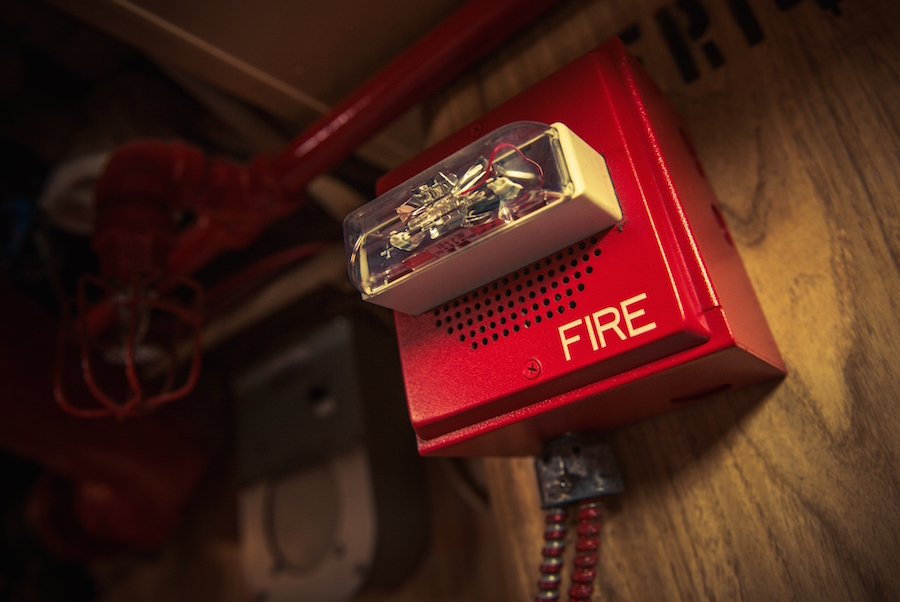 Notifications Appliances – Notification appliance include audio devices, like speakers and bells, and visual alerts, such as flashing strobe lights. The purpose of these parts of a fire alarm system is to alert building occupants of an emergency to help facilitate a safe and quick exit. These notification methods are designed to be distinct and universally understandable to ensure that they will not be confused with other kinds of signals.
- Emergency Voice Alarm Communications Systems – EVACS, or Emergency Voice Alarm Communications Systems, give verbal commands to building occupants in the event of an emergency. They may be programmed to provide specific instructions unique to an individual building and prove to be especially helpful buildings that may be difficult to exit, including high rises, arenas, hospitals, and detention facilities. Voice-based systems are typically used during security, fire, weather, or other emergency situations. This vocal response allows for instructions to be given to ensure a timely, orderly evacuation.
Click here to read more about our fire alarm systems! Contact us today for more information or an upgrade to your fire protection system.
Recent Posts


Related Blogs

Back-to-School Fire Protection: Treating August as a Life Safety Checkpoint
Every August, school buildings go from near-empty to full occupancy in a matter[…]

Alicia Shepard
12 Aug 2026

What Is Central Station Monitoring — And Is Your Building Actually Getting It?
When your fire alarm goes off at 2 a.m. on a Sunday, one[…]

Charlie Ragghianti
1 Jul 2026
Annual Fire Alarm Inspections: What Every Healthcare Facility Must Know to Stay Compliant
In healthcare environments where vulnerable populations depend on staff for their safety, fire[…]