
Commercial Fire Safety for Tampa Businesses: Your Complete Guide to Fire Protection as Summer Approaches

Charlie Ragghianti
20 May 2026


As the school year draws to a close across Tampa and the greater Tampa Bay region, commercial properties face a unique set of challenges that demand immediate attention. The transition from spring to summer brings increased foot traffic, seasonal staffing changes, and environmental conditions that can significantly impact your facility’s fire safety profile. For business owners and facility managers throughout Hillsborough County and surrounding areas, understanding commercial fire safety requirements isn’t just about compliance—it’s about protecting your employees, customers, and investment.
At A Total Solution, we’ve served Tampa businesses with comprehensive fire protection services for years, and we’ve seen firsthand how the end-of-school-year period creates specific vulnerabilities that many property owners overlook. Whether you operate a retail establishment in WestShore Plaza, manage an office building in downtown Tampa, or run a hospitality venue in Ybor City, the information in this guide will help you understand your fire safety obligations and take proactive steps to protect your property.
This comprehensive guide covers everything Tampa business owners need to know about commercial fire safety, fire code compliance, and fire protection services as we head into the summer months. We’ll explore the specific risks that emerge during this transitional period, walk through the requirements for commercial fire inspection, and provide actionable strategies to ensure your fire safety for businesses meets or exceeds all applicable standards.
Understanding the Summer Fire Risk Landscape in Tampa
Tampa’s subtropical climate creates year-round fire safety considerations, but the late spring and early summer months present particular challenges that every commercial property owner should understand. The combination of rising temperatures, afternoon thunderstorms, and increased building occupancy creates a perfect storm of potential fire hazards that require careful management.
Climate Factors Affecting Commercial Fire Safety
Florida’s fire statistics paint a sobering picture. According to the National Fire Protection Association (NFPA), commercial property fires increase notably during the summer months, with electrical fires representing one of the largest categories. In the Tampa Bay area specifically, the demand on cooling systems during our hottest months puts enormous strain on electrical infrastructure, particularly in older buildings that may not have been designed for modern HVAC loads.
The afternoon thunderstorms that define Tampa summers also contribute to fire risk. Lightning strikes can damage electrical systems, create power surges that affect fire alarm functionality, and in some cases directly ignite fires in commercial structures. Properties without adequate surge protection and properly maintained fire protection services are particularly vulnerable during storm season.
Humidity presents another challenge that many business owners underestimate. While high moisture content in the air might seem like it would reduce fire risk, humidity can actually compromise fire safety equipment. Moisture can corrode sprinkler system components, affect the sensitivity of smoke detectors, and degrade fire extinguisher functionality. Regular commercial fire inspection protocols must account for these environmental factors to ensure your protection systems remain operational.
Occupancy Changes and Fire Safety Implications
As schools release students for summer break, commercial properties throughout Tampa experience significant shifts in occupancy patterns. Retail centers see increased daytime traffic as families shop together. Entertainment venues and restaurants experience higher volumes as people have more leisure time. Summer camps and recreational facilities that sit dormant during the school year suddenly fill with children and staff.
These occupancy changes have direct implications for fire code compliance. Tampa’s fire codes, which align with the Florida Fire Prevention Code and incorporate elements of the NFPA standards, establish maximum occupancy limits based on available egress capacity, sprinkler system coverage, and other factors. A building that comfortably meets code requirements during normal operations may find itself approaching or exceeding safe limits during peak summer periods.
Furthermore, the type of occupants changes. Buildings that typically serve adult professionals may suddenly host summer interns, visiting family members, or customers with young children. Each of these populations has different evacuation capabilities and awareness levels, which affects how your emergency response plans should be structured. Effective fire safety for businesses must account for these demographic variations.
Fire Code Compliance Requirements for Tampa Commercial Properties
Meeting fire code compliance standards in Tampa requires understanding the layered regulatory framework that governs commercial fire safety. Business owners must navigate requirements at the federal, state, and local levels, with enforcement handled primarily by the Tampa Fire Rescue Department and the Hillsborough County Fire Marshal’s Office.
The Florida Fire Prevention Code
Florida adopts and amends the National Fire Protection Association’s codes as the basis for statewide fire safety requirements. The Florida Fire Prevention Code, which is updated on a regular cycle, establishes minimum standards for fire protection systems, emergency egress, hazardous materials storage, and numerous other aspects of commercial building safety. Tampa businesses must comply with these state requirements as a baseline.
Key areas addressed by the Florida Fire Prevention Code that affect most commercial properties include automatic sprinkler system requirements, fire alarm system specifications, emergency lighting and exit signage standards, portable fire extinguisher placement and maintenance, and requirements for fire-rated construction in certain occupancy types. Understanding which requirements apply to your specific property type is essential for maintaining fire code compliance.
Local Tampa Fire Safety Ordinances
Beyond state requirements, the City of Tampa has enacted local ordinances that may impose additional fire safety obligations on commercial property owners. These local requirements often address issues specific to Tampa’s building stock, climate, and risk profile. For example, local codes may specify inspection frequencies that exceed state minimums or require particular types of fire protection services in high-risk zones.
Tampa Fire Rescue conducts fire safety inspections of commercial properties and has authority to issue citations for code violations. The frequency of required commercial fire inspection depends on your occupancy classification, building size, and history of compliance. Properties with excellent compliance records may qualify for reduced inspection frequencies, while those with violations may face more frequent scrutiny.
Working with a qualified fire protection services provider like A Total Solution helps ensure you understand all applicable requirements and maintain continuous compliance. Our team stays current on code changes and can help you interpret how new requirements affect your specific property.
Industry-Specific Requirements
Certain industries face additional fire code compliance requirements beyond those applying to general commercial occupancies. If your Tampa business falls into one of these categories, you’ll need to address supplemental standards as part of your commercial fire safety program.
Healthcare facilities, including outpatient clinics and medical offices, must meet enhanced requirements designed to protect patients who may have limited mobility or awareness. Restaurants and commercial kitchens require specialized hood suppression systems and must maintain them according to specific schedules outlined in NFPA 96. Manufacturing and industrial facilities handling hazardous materials face extensive documentation and containment requirements. Educational and childcare facilities must implement age-appropriate evacuation procedures and maintain enhanced supervision ratios.
As summer approaches and many Tampa facilities prepare to host camps, educational programs, or other activities serving children, understanding these enhanced requirements becomes critical. Fire safety for businesses serving youth populations requires particular attention to evacuation planning, staff training, and emergency communication protocols.
Essential Fire Protection Systems for Commercial Buildings
Effective commercial fire safety relies on multiple interconnected systems working together to detect, suppress, and enable escape from fires. Understanding these systems, their maintenance requirements, and how they protect your property is fundamental to responsible facility management.
Automatic Fire Sprinkler Systems
Fire sprinkler systems remain the most effective means of controlling fires in commercial buildings. According to the NFPA’s research on sprinkler effectiveness, sprinklered buildings experience dramatically lower fire losses, both in terms of property damage and occupant injuries. For Tampa businesses, where fire protection services include sprinkler system installation and maintenance, ensuring your system remains fully operational is paramount.
Modern commercial sprinkler systems include several components that require regular attention. The sprinkler heads themselves must remain unobstructed and undamaged—even minor impacts can compromise their functionality. The piping network must be free of corrosion, leaks, and obstructions. Control valves must be secured in the open position and regularly inspected. The water supply, whether from municipal mains or dedicated storage, must provide adequate pressure and volume.
Tampa’s climate creates specific challenges for sprinkler system maintenance. The combination of humidity and heat can accelerate corrosion in system piping, particularly in areas with limited air circulation. Mineral buildup from Tampa’s water supply can affect sprinkler head functionality over time. These factors make regular commercial fire inspection of sprinkler systems even more important for local businesses.
At A Total Solution, we provide comprehensive sprinkler system services including installation, inspection, testing, and maintenance. Our technicians understand the unique challenges Tampa’s environment presents and can help ensure your system provides reliable protection year-round.
Fire Alarm and Detection Systems
While sprinkler systems suppress fires, alarm systems provide the early warning that enables safe evacuation. Commercial fire alarm systems integrate multiple components including smoke detectors, heat detectors, manual pull stations, audible and visual notification devices, and monitoring connections. Each component must function properly for the system to provide effective protection.
Fire code compliance requires regular testing of fire alarm systems, with specific tests required at different intervals as outlined in NFPA 72. Daily visual inspections should verify that control panels show normal status. Monthly testing should exercise notification devices and verify signal transmission to monitoring stations. Annual testing requires more comprehensive evaluation of all system components. Maintaining documentation of all testing is essential for demonstrating compliance during commercial fire inspection.
Summer operations can affect fire alarm system performance in ways that building managers should understand. Increased use of air conditioning can create air currents that affect smoke detector sensitivity. Higher occupancy levels mean more opportunities for accidental alarm activation, which can lead to alarm fatigue if not managed properly. Seasonal staff may not be familiar with alarm procedures, requiring enhanced training and communication.
Fire Extinguishers and Suppression Equipment
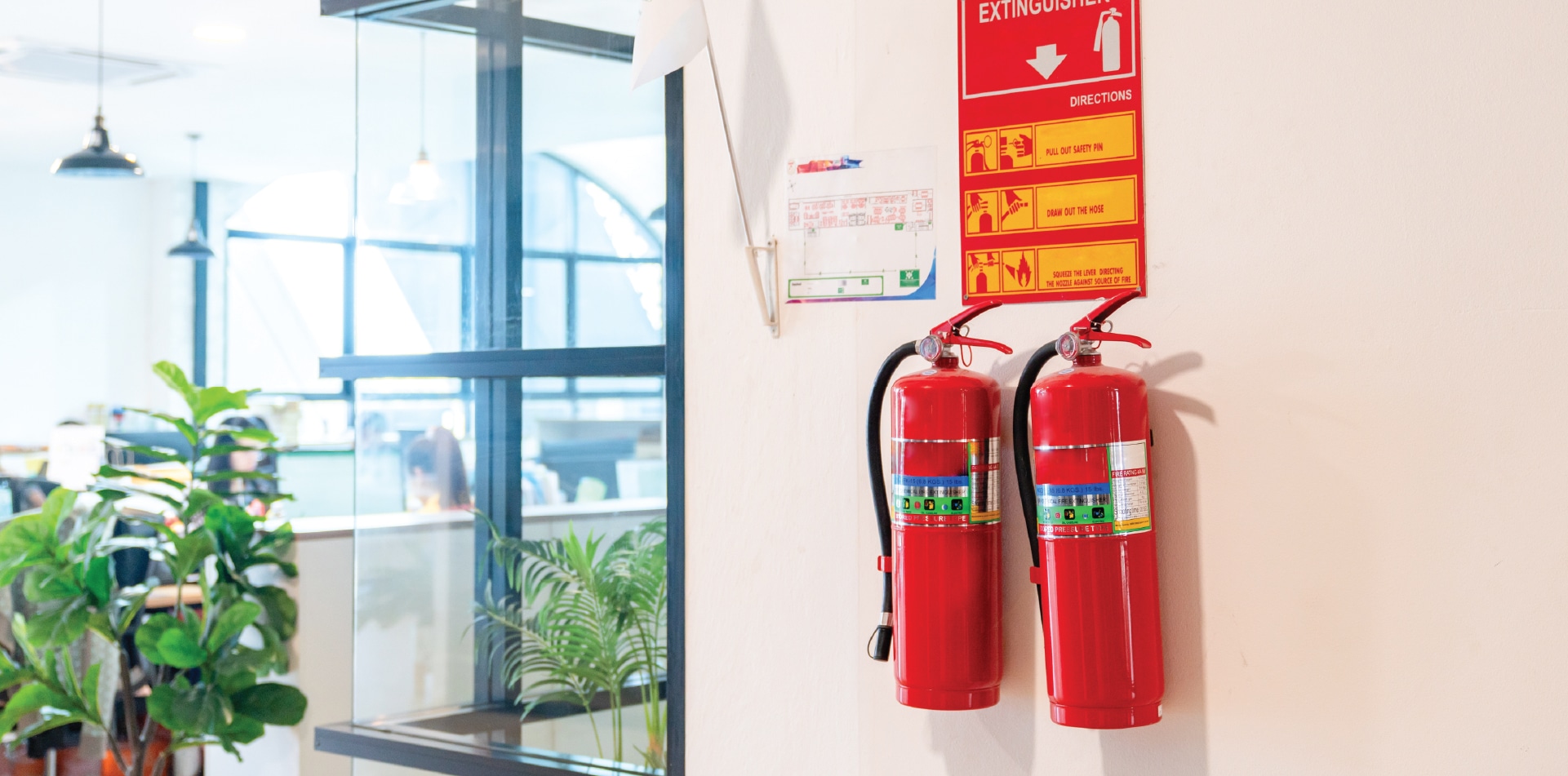
Portable fire extinguishers provide first-line defense against small fires before they grow beyond control. Fire code compliance requires appropriate extinguisher placement throughout commercial buildings, with specific requirements based on occupancy type, travel distances, and hazard classifications. Most commercial properties require extinguishers rated for Class A (ordinary combustibles), Class B (flammable liquids), and Class C (electrical) fires.
Monthly visual inspections should verify that extinguishers are in their designated locations, accessible, and showing proper pressure. Annual maintenance by a licensed fire protection services provider must include more detailed inspection and any necessary servicing. Hydrostatic testing is required at intervals specified by the extinguisher type. Maintaining this maintenance schedule is essential for fire safety for businesses of all types.
Commercial kitchens require specialized suppression systems designed to handle cooking fires involving grease and oils. These systems, typically using wet chemical agents, must be inspected and serviced according to manufacturer specifications and NFPA 96 requirements. As Tampa restaurants prepare for increased summer business, ensuring kitchen suppression systems are fully operational should be a priority.
Preparing Your Tampa Business for Summer: A Fire Safety Checklist
With school ending and summer operations beginning, now is the ideal time to conduct a thorough evaluation of your commercial fire safety program. This checklist covers the key areas that Tampa businesses should address before the summer rush begins.
System Inspections and Testing
Schedule a comprehensive commercial fire inspection before summer operations begin. This inspection should cover all fire protection systems including sprinklers, alarms, extinguishers, and any specialized suppression equipment. Document the inspection results and address any deficiencies immediately. Consider this your opportunity to identify and resolve issues before they become compliance violations or, worse, contribute to a fire emergency.
Verify that all inspection tags and certifications are current. Fire inspectors will check these dates, and expired certifications can result in citations. Work with your fire protection services provider to establish a maintenance calendar that ensures continuous compliance throughout the year.
Test emergency generators and backup power systems. Extended power outages from summer storms can disable fire alarm systems if backup power isn’t functioning. Ensure generators have adequate fuel and are programmed to activate automatically during power failures.
Electrical System Evaluation
Have a licensed electrician evaluate your building’s electrical capacity, particularly if you’ve added equipment or expect increased demand from cooling systems. According to the U.S. Fire Administration, overloaded circuits are a leading cause of commercial fires, and the summer months when air conditioning runs continuously present the greatest risk.
Inspect electrical panels for signs of overheating, including discoloration, unusual odors, or warm surfaces. Check that all circuits are properly labeled and that panel access remains unobstructed. Ensure electrical rooms are clean, dry, and free of stored materials that could present fire hazards.
Review extension cord and power strip usage throughout your facility. These devices are intended for temporary use, not as permanent wiring solutions. Excessive reliance on extension cords often indicates inadequate electrical infrastructure that should be professionally upgraded.
Evacuation Planning and Training
Review and update your evacuation plan to reflect summer operations. If staffing changes seasonally, ensure that evacuation roles are assigned to current personnel. If occupancy patterns shift, verify that evacuation routes can handle anticipated traffic. If your facility will host events or programs not conducted during other parts of the year, develop specific evacuation procedures for those activities.
Conduct fire drills before summer programs begin. This is particularly important if your Tampa business will serve children through camps or similar programs. Practice evacuations during different operational scenarios and at different times of day. Document drill results including evacuation times, any problems encountered, and corrective actions taken.
Train all staff, including seasonal employees, on fire safety procedures. Training should cover alarm recognition and response, evacuation routes and assembly areas, fire extinguisher locations and basic operation, and procedures for assisting customers or visitors with disabilities. Commercial fire safety depends not just on systems but on people who know how to respond appropriately.
Physical Hazard Assessment
Walk through your facility and identify any conditions that could contribute to fire ignition or spread. Look for accumulations of combustible materials, particularly in storage areas, mechanical rooms, and outdoor spaces. Check that flammable liquids are properly stored in approved containers and cabinets. Verify that hot work activities (welding, cutting, etc.) follow proper permit procedures.
Examine exit pathways to ensure they remain clear and unobstructed. Summer merchandise displays, seasonal equipment, and temporary storage should never block evacuation routes or obstruct exit doors. Emergency exit signs should be illuminated and visible from all required distances.
Inspect outdoor areas for fire hazards. Dry landscaping, accumulated debris, and improperly stored materials can provide fuel for fires that spread to structures. If your property includes outdoor cooking equipment, verify that it’s positioned with proper clearances and that fire suppression equipment is readily accessible.
Special Considerations for Summer Programs and Events
Many Tampa commercial properties transform their operations during summer months to accommodate camps, educational programs, special events, and other activities that differ from typical business operations. These changes require additional fire safety planning to ensure appropriate protection for all occupants.
Summer Camp and Youth Program Fire Safety
If your facility hosts summer camps or youth programs as Tampa schools release for summer break, you face enhanced fire safety responsibilities. Children have different evacuation capabilities than adults and may not respond appropriately to fire alarms without proper preparation. Staff-to-child ratios must be sufficient to ensure that all children can be safely evacuated, including those with disabilities or special needs.
Conduct orientation sessions that familiarize children with evacuation routes and procedures in age-appropriate ways. Practice drills regularly, including during the first week of each program session. Establish accountability procedures to ensure all children are accounted for during evacuations. Communicate emergency procedures to parents and ensure emergency contact information is current and accessible.
Fire code compliance for facilities serving children includes requirements beyond those for general commercial occupancies. Required fire protection services may include enhanced alarm systems, additional exit capacity, and specific documentation requirements. Consult with Tampa Fire Rescue or a qualified fire safety consultant to ensure your facility meets all applicable standards.
Special Event Fire Safety Planning
Graduation celebrations, summer festivals, promotional events, and other special occasions bring unusual occupancy patterns and potential hazards to commercial properties. Each special event should include a fire safety evaluation as part of the planning process.
Determine expected attendance and compare it to your facility’s approved occupancy limits. If the event may approach maximum capacity, implement crowd management strategies and assign staff to monitor occupancy levels. Never exceed posted occupancy limits regardless of event circumstances.
Evaluate event-specific hazards including decorations, temporary cooking equipment, pyrotechnics or special effects, and any activities that could create ignition sources. Many of these activities require permits from Tampa Fire Rescue and may require on-site fire watch personnel. Understanding and complying with permit requirements is essential for fire code compliance during special events.
Ensure that event setups don’t obstruct fire protection equipment or evacuation pathways. Stages, vendor booths, tables, and other event infrastructure must be positioned to maintain required clearances around fire extinguishers, pull stations, and exits. Brief event staff and vendors on fire safety procedures before events begin.
Working with Fire Protection Professionals
Maintaining effective commercial fire safety requires expertise that most business owners and facility managers don’t possess. Working with qualified fire protection services providers ensures that your systems are properly designed, installed, maintained, and documented to meet all applicable requirements.
Choosing a Fire Protection Partner
When selecting a fire protection services provider for your Tampa business, look for several key qualifications. The company should be properly licensed by the State of Florida. Technicians should hold appropriate certifications from recognized organizations such as NICET (National Institute for Certification in Engineering Technologies). The company should carry adequate insurance to protect your interests in case of errors.
Experience with your property type matters. Fire protection requirements vary significantly between retail, office, industrial, hospitality, and other occupancy categories. A provider familiar with your industry understands the specific challenges and compliance requirements you face. Local experience is equally valuable—a company that has worked extensively in Tampa understands the climate factors, local code requirements, and working relationships with authorities having jurisdiction.
A Total Solution has provided fire protection services to Tampa area businesses for years. Our comprehensive capabilities include fire sprinkler system design, installation, inspection, and maintenance. We understand the unique challenges that Tampa’s climate and building stock present and have established relationships with local fire officials. Our goal is to be your partner in maintaining fire safety for businesses, not just a vendor who shows up when systems need service.
The Value of Proactive Maintenance
Reactive fire protection maintenance—waiting until something breaks or an inspector finds a problem—is more expensive and risky than proactive maintenance programs. When fire protection systems fail, the consequences can include property damage, business interruption, code violations, increased insurance costs, and most importantly, injury or death to building occupants.
Proactive maintenance programs identify and address potential problems before they cause system failures or compliance issues. Regular commercial fire inspection catches minor issues—a slightly corroded pipe, a detector nearing end of life, a valve that’s become difficult to operate—before they become major problems. Addressing these issues on your schedule, rather than in emergency response to a failure or violation, is more convenient and typically less expensive.
Additionally, proactive maintenance generates documentation that demonstrates your commitment to fire code compliance. When inspectors see well-maintained records showing regular testing, prompt deficiency corrections, and systematic attention to fire safety, they’re more likely to view your property favorably. This documentation can also be valuable in insurance negotiations and, should the worst occur, in demonstrating that you took reasonable steps to prevent fire losses.
Understanding Commercial Fire Inspection Requirements
Commercial fire inspection is a fact of life for Tampa business owners. Understanding what inspectors look for, how to prepare, and how to address any findings helps ensure that inspections go smoothly and that your property maintains good standing with fire officials.
What Fire Inspectors Evaluate
During a commercial fire inspection, Tampa Fire Rescue inspectors evaluate numerous aspects of your fire safety program. They check that fire protection systems are properly installed, maintained, and documented. They verify that exits are accessible, properly marked, and free of obstructions. They look for hazardous conditions including improper storage of flammable materials, electrical hazards, and blocked fire department access.
Inspectors also verify that your occupancy and operations match what’s approved for the building. If you’ve made changes to your use of the space, added equipment, or increased storage quantities of certain materials, these changes may require updated permits or additional fire protection services. Operating outside your approved parameters can result in violations even if your fire protection systems are otherwise compliant.
Documentation review is an important part of commercial fire inspection. Inspectors will ask to see records of system testing, maintenance, and any repairs performed. They’ll check that inspection tags are current and that any previous violations have been corrected. Having organized, complete documentation readily available demonstrates professionalism and makes inspections more efficient.
Preparing for Fire Inspections
Before any scheduled commercial fire inspection, conduct your own walkthrough to identify and correct potential issues. Check that all exit paths are clear and properly illuminated. Verify that fire extinguishers are in place, properly mounted, and showing current inspection tags. Ensure that electrical panels are accessible and properly labeled. Confirm that sprinkler heads have required clearance and aren’t obstructed by storage or displays.
Gather your documentation before the inspector arrives. This should include recent inspection reports, system test records, maintenance logs, and any correspondence with fire officials about your property. Having everything organized in a dedicated fire safety binder or digital folder saves time and demonstrates your systematic approach to commercial fire safety.
Designate a knowledgeable staff member to accompany the inspector through your property. This person should understand your fire protection systems, know where documentation is located, and have authority to answer questions about operations. If questions arise that can’t be immediately answered, commit to providing information promptly and follow through on that commitment.
Responding to Inspection Findings
If a fire inspection identifies violations, respond promptly and thoroughly. Understand exactly what the violation is and what’s required to correct it. Many violations involve straightforward fixes—clearing an obstructed exit, replacing an expired extinguisher, repairing a malfunctioning exit sign—that can be addressed immediately. More complex issues may require professional assistance from your fire protection services provider.
Meet all deadlines for violation correction. Failure to address violations within specified timeframes can result in escalating penalties, including fines and orders to cease operations. If you cannot complete corrections by the deadline, communicate proactively with fire officials about your timeline and demonstrate that you’re making diligent progress.
Document your corrections thoroughly. Take photographs showing the corrected condition. Obtain receipts or work orders from contractors who performed repairs. Submit required documentation to fire officials demonstrating that violations have been addressed. Maintain copies of everything in your fire safety records for future reference.
Insurance Considerations for Commercial Fire Safety
Your approach to commercial fire safety directly impacts your insurance costs and coverage. Insurance companies assess fire risk when setting premiums and determining coverage terms. Properties with strong fire protection programs typically enjoy more favorable insurance treatment than those with deficiencies or poor maintenance histories.
Maintain comprehensive documentation of your fire protection systems and maintenance activities. Insurance companies may request evidence of your fire safety program during underwriting or after a claim. Being able to demonstrate regular commercial fire inspection, prompt maintenance, and code compliance supports your insurance relationship.
Review your insurance coverage annually to ensure it reflects current property values and operations. If you’ve made improvements to your fire protection services, inform your insurer—these upgrades may qualify you for premium reductions. Conversely, if your operations have changed in ways that affect fire risk, you need coverage that reflects current conditions.
Consider business interruption insurance as part of your fire safety planning. Even if a fire is quickly controlled, smoke damage, water damage from sprinkler discharge, and investigation requirements can prevent normal operations for extended periods. Business interruption coverage helps bridge the gap until you can resume full operations.
Taking Action: Your Next Steps for Commercial Fire Safety
As Tampa businesses prepare for summer operations, now is the time to ensure your commercial fire safety program is ready for the challenges ahead. The end of the school year brings changes in occupancy, staffing, and operations that can affect fire risk and compliance requirements. Addressing these factors proactively protects your property, your occupants, and your business.
Start by scheduling a comprehensive commercial fire inspection if you haven’t had one recently. Identify and address any system deficiencies or compliance gaps before they become problems. Review your evacuation plans and train staff—including seasonal employees—on fire safety procedures. Evaluate the specific risks that summer operations create for your property and implement appropriate mitigation measures.
A Total Solution is here to support Tampa businesses with all aspects of fire protection services. From sprinkler system installation and maintenance to comprehensive fire safety consulting, our team has the expertise and local knowledge to help you maintain effective protection and fire code compliance. We understand that fire safety for businesses is about more than just meeting minimum requirements—it’s about creating an environment where employees and customers can work and shop with confidence.
Don’t wait until a fire emergency or inspection violation forces action. Contact A Total Solution today to schedule your pre-summer fire safety evaluation. Our team will assess your current protection, identify any areas needing attention, and work with you to develop a plan that ensures your Tampa business is fully prepared for safe summer operations.
Protecting Tampa businesses is what we do. Let us show you why A Total Solution is the fire protection partner your business deserves.
Recent Posts


Related Blogs

Back-to-School Fire Protection: Treating August as a Life Safety Checkpoint
Every August, school buildings go from near-empty to full occupancy in a matter[…]

Alicia Shepard
12 Aug 2026

What Is Central Station Monitoring — And Is Your Building Actually Getting It?
When your fire alarm goes off at 2 a.m. on a Sunday, one[…]
Charlie Ragghianti
1 Jul 2026
Annual Fire Alarm Inspections: What Every Healthcare Facility Must Know to Stay Compliant
In healthcare environments where vulnerable populations depend on staff for their safety, fire[…]